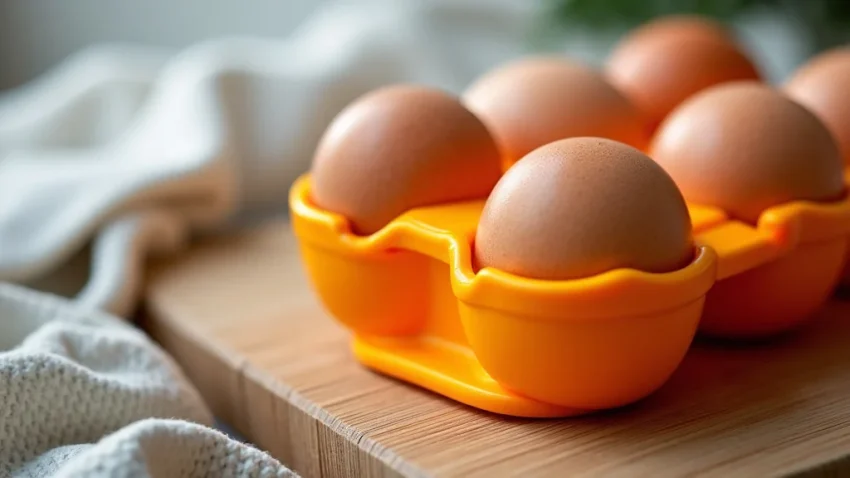
Have you ever opened your refrigerator, only to find a cracked egg rolling out, making a mess? It’s a common kitchen mishap that can be avoided with a simple solution. A good egg holder keeps your eggs safe, organized, and easy to access.
This guide will help you find the best option by exploring the factors influencing kitchen egg holder price and what you can expect to pay. You’ll learn what features matter most and how to get the most value for your money, ensuring you make an informed purchase without overspending.
Key Takeaways
- Egg holder prices vary based on material, capacity, and special features.
- Basic plastic holders are the most affordable option.
- More durable materials like stainless steel or ceramic come at a higher cost.
- Specialized holders with features like rotating mechanisms or dual compartments can increase the price.
- Consider the size of your refrigerator and the number of eggs you typically store.
- Reading reviews can help you find a balance between price and quality.
Understanding Kitchen Egg Holder Price Factors
The cost of a kitchen egg holder is not a one-size-fits-all number. Several elements come into play that determine how much you’ll spend. The most significant factor is the material used to construct the holder.
Simpler, more budget-friendly options often use plastics, while premium choices might be made from stainless steel, ceramic, or even wood. The capacity, or how many eggs the holder can store, also directly impacts the price. A small holder for a dozen eggs will naturally be cheaper than a large one designed for thirty.
Beyond material and capacity, design features play a role. Some holders offer specialized functions like stacking, rotating dispensers, or built-in freshness trackers, all of which can add to the overall cost.
Material Matters for Egg Holders
The material of an egg holder is one of the primary drivers of its price. Plastic holders are generally the most economical. They are lightweight, easy to clean, and come in a wide variety of colors and designs.
However, some plastics can be prone to cracking over time or absorbing odors.
For a more durable and aesthetically pleasing option, many people opt for stainless steel egg holders. These are incredibly sturdy, resistant to rust and stains, and can give your kitchen a modern look. Their higher durability and premium feel justify their increased cost compared to plastic.
Ceramic egg holders offer a different kind of appeal, often fitting well into more traditional or farmhouse-style kitchens. They are usually heavier and can provide excellent protection for eggs. However, ceramic is also fragile and can break if dropped, and its cost can range from moderate to high depending on the design and craftsmanship.
Wood, while less common for full egg holders, might be used for decorative elements or for specific types of dispensers. Wooden components can add a natural warmth but may require more care to prevent staining or warping. The price for wood-accented holders can also vary widely.
Capacity and Size Influence Cost
The number of eggs a holder is designed to store directly affects its price. Smaller holders, typically designed for a standard dozen eggs, are the most common and generally the cheapest. These are ideal for individuals, couples, or those who don’t buy eggs in bulk.
Larger capacity holders, capable of storing 24, 30, or even more eggs, will naturally cost more. This is because they require more material and a larger overall design. If your household consumes a lot of eggs or you often buy large cartons from wholesale stores, investing in a larger holder can be more practical and eventually more cost-effective by preventing eggs from being stored loosely and potentially breaking.
The physical dimensions of the holder also play a part. A compact holder that fits neatly into a small refrigerator or a specific drawer will be priced differently than a larger, multi-tiered unit designed to maximize vertical space in a more spacious fridge. Always measure your intended storage space before purchasing to ensure a good fit and avoid paying for a holder that won’t work.
Special Features and Design
Beyond basic functionality, many egg holders come with added features that enhance their usability and, consequently, their price. Rotating dispensers, often seen in cylinder-shaped holders, allow you to access eggs from the bottom while adding new ones to the top, ensuring you use older eggs first. This “first-in, first-out” system can help reduce spoilage.
Some holders are designed for specific refrigerator configurations, like under-shelf mounts or drawer inserts. These can be particularly useful for optimizing space but might be more expensive due to their customizability or unique mounting mechanisms.
Consider egg holders with integrated freshness indicators or date trackers. While these can be very helpful, they often add to the manufacturing cost. Similarly, decorative elements, intricate designs, or holders that are part of a larger kitchenware collection may command a higher price tag.
Price Ranges for Kitchen Egg Holders
When looking at kitchen egg holder price points, you’ll find a broad spectrum, from very affordable to moderately expensive. Understanding these ranges can help you set a budget and identify what you’re getting for your money. The most budget-friendly options are typically simple plastic egg trays or basic cartons.
These are designed to hold eggs securely and prevent them from rolling around.
A basic plastic egg holder, often designed for a dozen eggs, can be found for as little as $5 to $15. These are functional and get the job done without adding much to your kitchenware cost. They are a great entry point for anyone needing a simple solution.
Moving up in price, you’ll encounter more robust plastic holders, or those made from slightly more durable materials, with slightly larger capacities or better design elements. These might range from $15 to $30. This category often includes holders with stacking capabilities or those with a more streamlined aesthetic.
For holders made from higher-quality materials like stainless steel, thicker BPA-free plastics, or ceramic, the price range typically starts from $25 and can go up to $50 or more. These are built for longevity, enhanced aesthetics, and superior protection. Specialty designs, like rotating dispensers or those with multiple tiers, will fall into this higher bracket.
It is rare to find a high-quality, functional egg holder for significantly more than $50, unless it’s a designer piece or part of an exclusive kitchen set. Generally, for everyday use, the sweet spot for a good balance of quality, capacity, and features lies between $20 and $40.
Budget-Friendly Options Under $15
If you are on a tight budget or simply want a no-frills solution, there are many excellent kitchen egg holder options available for under $15. These are usually constructed from standard plastics.
The most common types in this price range are the simple trays designed to hold 12 or 18 eggs. They often fit directly into refrigerator drawers or shelves, providing a stable place for your eggs. Some might have slightly elevated ridges to keep eggs from touching each other excessively.
Another option is a basic plastic egg carton, similar to what eggs come in from the store but made from sturdier plastic. These typically hold a dozen eggs and feature a lid to protect them. They are lightweight and easy to clean.
One popular example is a clear plastic egg carton that can be reused. It often has a single layer and is designed to hold 12 eggs securely. For around $10, you can get a durable, reusable carton that helps prevent the flimsy cardboard ones from getting crushed in your fridge.
Consider a 24-egg capacity holder made from a denser plastic. These are slightly larger but still quite affordable, often costing between $12 and $15. They provide more storage for families or those who cook with eggs frequently.
Mid-Range Holders $15 to $30
In the $15 to $30 price range, you’ll find egg holders that offer a significant upgrade in terms of durability, design, and functionality. These options often cater to those who want something more robust and aesthetically pleasing than basic plastic but are not yet ready to invest in premium materials.
This category frequently includes holders made from thicker, BPA-free plastics that feel more substantial. They might feature more ergonomic designs, such as handles for easy removal from the fridge, or interlocking mechanisms that allow for stable stacking of multiple units.
You’ll also start seeing holders with clearer functional advantages. For instance, some might have a sloped design that encourages eggs to roll forward, making it easier to pick them out. Others might come with adjustable dividers to accommodate different egg sizes or even small compartments for other items.
A common example in this range is a stackable egg holder for 24 eggs made from clear, sturdy plastic. These often have a footprint of around 10×14 inches and a height that allows them to be stacked securely. They are a great way to maximize refrigerator space.
Another option could be a compact, 18-egg rotating dispenser made from a slightly more premium plastic.
Many reviewers praise holders in this mid-range for offering the best balance between price and performance. They tend to be well-made, last for a good number of years, and provide practical solutions for egg storage.
Premium Options Over $30
For those seeking the best in durability, design, and convenience, premium kitchen egg holders priced over $30 offer superior quality and often unique features. These are typically constructed from high-end materials like stainless steel, ceramic, or premium-grade plastics with a polished finish.
Stainless steel egg holders are a prime example. They are exceptionally durable, rust-resistant, and easy to clean, offering a sleek, modern look that complements many kitchen decors. A well-made stainless steel holder for 24 eggs might cost between $35 and $50.
Ceramic egg holders also fall into this category, especially if they are part of a collection or feature intricate designs. They offer a classic aesthetic but require more careful handling due to their fragility. A beautifully crafted ceramic egg keeper could range from $40 to $60.
Specialty designs also contribute to a higher price point. This can include rotating dispensers with smooth, silent mechanisms, or multi-tiered holders that offer significant storage while taking up minimal horizontal space. Holders designed to hang under shelves or fit specific drawer depths might also be in this premium bracket.
For instance, a stainless steel 30-egg rotating dispenser with a solid base might cost around $45. This type of holder offers both excellent capacity and the convenience of easy access to eggs. When considering these premium options, think about the longevity and the aesthetic enhancement they bring to your kitchen.
Factors Affecting Kitchen Egg Holder Price Beyond Material
While material is a primary cost driver, several other factors significantly influence the price of a kitchen egg holder. These can range from the brand reputation to innovative design elements and where you choose to make your purchase. Understanding these nuances can help you spot a good deal or justify a higher price for a superior product.
Brand Reputation and Quality
Just like with any product, well-known brands often command higher prices due to their reputation for quality, durability, and customer satisfaction. Brands that specialize in kitchen organization or high-end cookware might charge a premium for their egg holders, even if the materials are similar to less expensive options.
This premium often reflects more rigorous quality control processes, better materials sourcing, and a commitment to design and functionality that stands the test of time. For example, a kitchenware brand known for its stainless steel appliances might offer an egg holder that uses a slightly higher grade of steel or has a more polished finish, justifying a higher kitchen egg holder price.
However, it’s important to note that a higher price doesn’t always guarantee superior quality. Sometimes, lesser-known brands offer excellent products at more competitive prices. Reading customer reviews is a good way to assess the actual quality and value offered by any brand, regardless of its popularity.
Design and Functionality Innovations
Innovative designs and unique functionalities can significantly increase the price of an egg holder. Features like built-in freshness tracking dials, modular stacking systems that allow for customization, or holders that are specifically shaped to fit oddly shaped refrigerator shelves all add complexity to the manufacturing process.
Consider a rotating egg dispenser with a built-in timer or a reminder system for when to buy more eggs. Such advanced features require more sophisticated engineering and components, thus raising the price.
Another example is an egg holder designed for maximum space efficiency in compact refrigerators. This might involve a very specific shape or a mounting system that allows it to be attached to the side of a shelf or door. The engineering and testing required for these specialized designs contribute to their higher kitchen egg holder price.
Furthermore, aesthetically pleasing designs that go beyond basic utility, such as holders with decorative patterns, unique colorways, or ergonomic shapes that are comfortable to handle, can also add to the cost. These are often created by designers who focus on both form and function.
Where You Buy Your Egg Holder
The retail environment where you purchase your egg holder can also affect its price. Online marketplaces like Amazon, Walmart, or specialty kitchenware stores often have a wide range of options at competitive prices, with frequent sales and discounts.
Department stores or home goods stores might carry a curated selection of egg holders, sometimes from premium brands, which could mean higher prices. These stores may also offer more personalized customer service or the ability to see and touch the product before buying.
Specialty kitchenware shops often stock unique or high-end egg holders, and while their prices might be higher, they can be a good source for hard-to-find items or expertly crafted pieces. You might find artisan-made ceramic egg holders or advanced organizers in such stores.
Conversely, discount retailers or dollar stores might offer very basic plastic egg holders at the lowest price points, though the quality and durability might be compromised. Always compare prices across different retailers to ensure you are getting the best value.
Tips for Finding Value in Kitchen Egg Holder Price
Purchasing an egg holder doesn’t have to break the bank. By employing a few smart shopping strategies, you can find a durable and functional option that fits your budget. The key is to prioritize what’s important to you and be aware of potential savings.
Read Reviews and Compare Products
Before making any purchase, invest time in reading customer reviews. Real-world experiences can reveal a lot about a product’s durability, ease of use, and whether it truly lives up to its claims. Pay attention to comments about how well the holder fits in a refrigerator, how easy it is to clean, and if it holds up over time.
Comparing different products side-by-side, even within the same price range, is crucial. Look at the specifications, materials, and dimensions. Websites that allow you to filter by price, material, and capacity can be incredibly helpful in narrowing down your choices.
For example, if two similar-looking plastic egg holders are priced differently, read reviews to see if one is made of sturdier plastic or has a more robust lid design that makes it worth the extra few dollars. Sometimes, a slightly higher kitchen egg holder price indicates better construction.
Look for Sales and Discounts
Retailers frequently offer sales and discounts on kitchenware. Keep an eye out for seasonal promotions, holiday sales, or clearance events. Online stores often have a “deals” or “offers” section where you can find discounted items.
Signing up for email newsletters from your favorite kitchenware brands or retailers can also alert you to upcoming sales. Many offer a discount on your first purchase as an incentive.
Consider waiting for major shopping events like Black Friday or Cyber Monday, which often feature significant markdowns on a wide array of products, including kitchen accessories.
Consider Your Specific Needs
The best value is often found in a product that perfectly matches your needs. If you only ever buy a dozen eggs at a time and have limited fridge space, a large, expensive holder for thirty eggs might be overkill and poor value for you.
Think about how many eggs you typically store, the dimensions of your refrigerator, and any specific organizational challenges you face. Do you need a holder that stacks? Is it important for it to be transparent?
Answering these questions will help you avoid paying for features you don’t need.
For instance, a family of four that consumes a lot of eggs might find a durable 24-egg holder for $25 to be a better long-term value than repeatedly buying flimsy cartons or having eggs stored insecurely, leading to waste.
Common Myths Debunked
Myth 1: All egg holders are essentially the same, so the cheapest is always best.
This is a common misconception. While many egg holders serve the basic purpose of storing eggs, their quality, durability, and functionality can vary significantly. The cheapest options are often made from brittle plastic that can crack easily, leading to a shorter lifespan and potential egg breakage.
Higher-priced holders might use sturdier materials, have better designs for egg protection, and last much longer, offering better value over time.
Myth 2: Only expensive egg holders are safe for my refrigerator.
Safety in terms of preventing cracks and spoilage is not directly tied to price. Many affordable egg holders made from food-grade plastic provide excellent protection. The key is to choose a holder that fits your eggs snugly and keeps them from rolling around.
Look for sturdy construction and a secure lid. Some expensive holders offer convenience features, but basic safety can be found at various price points.
Myth 3: You need a special egg holder for every type of egg.
Most standard egg holders are designed to accommodate common chicken egg sizes, typically medium to large. While extra-large eggs or very small eggs might not fit perfectly, most holders have enough flexibility or space to manage slight variations. Holders specifically for quail or duck eggs are rare and usually made by specialty providers, but for typical kitchen use, a standard holder will suffice.
Myth 4: Transparent egg holders are always better because you can see the eggs.
Transparency can be helpful for quickly identifying how many eggs are left. However, it’s not a requirement for functionality. Opaque holders, especially those made from durable colored plastic or ceramic, can be just as effective at protecting eggs.
Some people also prefer opaque holders to reduce light exposure to eggs, which is thought by some to help maintain freshness, though the scientific evidence for this is minimal in a refrigerator setting.
Frequently Asked Questions
Question: What is the average price for a basic plastic egg holder?
Answer: A basic plastic egg holder, typically holding 12-18 eggs, can range from $5 to $15.
Question: How much do stainless steel egg holders typically cost?
Answer: Stainless steel egg holders are usually priced between $25 and $50, depending on capacity and design.
Question: Are expensive egg holders worth the extra money?
Answer: They can be if you value superior durability, premium aesthetics, or specialized features like rotating dispensers. For basic needs, mid-range options often provide good value.
Question: Should I buy a holder with a lid?
Answer: Yes, a lid is highly recommended. It protects eggs from accidental damage and prevents them from absorbing odors from other foods in the refrigerator.
Question: Do egg holder prices differ significantly online versus in physical stores?
Answer: Prices can vary. Online stores often have a wider selection and competitive pricing, while physical stores might offer sales or allow you to inspect the product directly.
Final Thoughts
The kitchen egg holder price is influenced by material, capacity, and special features. You can find functional holders for under $15, while premium options with stainless steel or unique designs may cost $30 or more. Prioritizing your needs and comparing products will help you find the best value for keeping your eggs safe and organized.