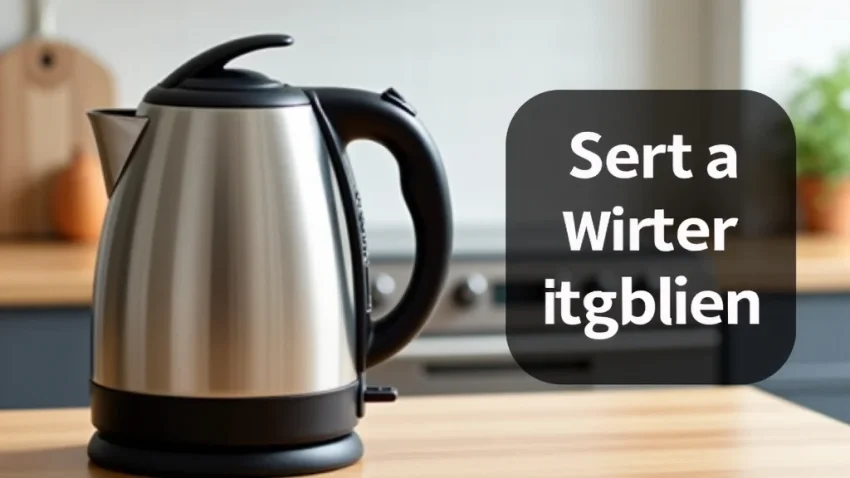
You’re in the kitchen, ready for your morning tea, and you reach for your old kettle. It takes ages to boil, or maybe it just doesn’t work anymore. It’s time for an upgrade!
But with so many options, figuring out the right kitchen electric kettle price can feel overwhelming. This guide will help you understand the factors that influence cost and find the best kettle for your budget and needs. You’ll learn what to expect when shopping and how to make a smart purchase.
Key Takeaways
- Understand how features impact the cost of electric kettles.
- Learn the typical price ranges for basic, mid-range, and premium models.
- Discover why brand reputation matters for electric kettle pricing.
- Identify the role of materials and build quality in determining price.
- Explore how energy efficiency and special features affect the kitchen electric kettle price.
Understanding Kitchen Electric Kettle Price Factors
When you’re looking for a new electric kettle, the price tag can vary quite a bit. Several elements work together to set the cost you see on the shelf or online. Thinking about these factors will help you make a smarter choice and avoid overpaying for features you don’t need.
It’s about finding the sweet spot between quality and affordability.
Material and Build Quality
The materials used to construct an electric kettle play a big role in its price. Kettles made from stainless steel are often more durable and can command a higher price than those made from plastic. Glass kettles offer a modern look and allow you to see the water boiling, but they can be more fragile.
The thickness and quality of the metal or plastic, as well as the design of the handle and lid, also contribute to the overall cost and perceived value. A well-built kettle will last longer, making the initial investment worthwhile.
- Stainless Steel: Durable, resistant to rust, and easy to clean. Prices generally range from $30 to $100+.
- Glass: Visually appealing, allows monitoring of the boiling process. Can be more expensive ($40-$120) due to design and material.
- Plastic: Most affordable option, but can sometimes impart a plastic taste to the water and may not be as durable. Prices typically start from $20.
A good example of build quality is evident in the construction of the heating element. Sealed heating elements, often found in higher-priced kettles, are easier to clean and less prone to mineral buildup than exposed coils. This attention to detail in manufacturing directly impacts the longevity and user experience, justifying a higher kitchen electric kettle price.
Brand Reputation and Warranty
Well-known brands often charge more for their products, and this is true for electric kettles too. Companies with a long history of producing reliable appliances typically have higher prices due to their established reputation for quality and customer service. These brands also tend to offer better warranties, which can provide peace of mind and protect your investment.
A longer warranty period, such as two to five years, often accompanies a higher purchase price.
- Established brands like Cuisinart, Breville, and Smeg usually fall into the mid-to-high price range, often between $50 and $150.
- Their pricing reflects not just the product itself but also the brand’s legacy of performance and customer support.
- Consumers often trust these brands to deliver consistent quality and durability, making them willing to pay a premium.
Consider a scenario where two kettles look identical. One is from an unknown brand, costing $25, and has a 90-day warranty. The other is from a reputable manufacturer, costing $60, with a two-year warranty.
The higher kitchen electric kettle price for the trusted brand often includes assurances of safety, performance, and longevity, which are valuable benefits.
Capacity and Power Output
The size of the kettle, measured by its capacity, and its power output can influence the price. Larger kettles, designed to boil more water at once, may cost more due to the increased materials and larger heating element required. Power output, measured in watts, affects how quickly the water heats up.
Kettles with higher wattage (e.g., 1500-1800 watts) tend to boil water faster, and this feature can sometimes come with a slightly higher price tag.
For instance, a compact 1-liter kettle might be priced lower than a 1.7-liter model with similar features. The higher wattage also means it draws more electricity when in use, though the faster boiling time can offset this by reducing the duration of energy consumption. This is an important consideration when evaluating the overall value and kitchen electric kettle price.
Price Ranges for Electric Kettles
Electric kettles come in a wide spectrum of prices, catering to various budgets and needs. Understanding these general price brackets can help you narrow down your search and set realistic expectations for what you can get for your money. Each tier offers different levels of features, durability, and design.
Budget-Friendly Options
For those on a tight budget, basic electric kettles can be found for as little as $20 to $40. These models typically have a plastic construction and essential features for boiling water. They are functional and serve the primary purpose of heating water quickly.
While they might lack some of the advanced features or premium materials found in more expensive models, they offer excellent value for simple needs.
- These kettles are ideal for occasional use or for students in dorm rooms.
- Expect straightforward designs and manual shut-off features.
- Durability might be a concern compared to higher-end models.
A common example is a 1.5-liter plastic kettle that boils water in about 5-7 minutes. While it gets the job done, it might feel less sturdy and have fewer safety mechanisms than pricier alternatives. The kitchen electric kettle price here is focused purely on basic functionality.
Mid-Range Performers
The mid-range segment, typically priced from $40 to $80, offers a good balance of features, quality, and style. Here, you’ll find kettles made from stainless steel, often with double-wall construction for better insulation and quieter operation. Many mid-range models include useful features like automatic shut-off, boil-dry protection, and cord storage.
They are a popular choice for many households due to their reliability and enhanced user experience.
- These kettles often feature a capacity of 1.5 to 1.7 liters.
- Variable temperature control might start appearing in the upper end of this range.
- They offer a noticeable step up in build quality and design aesthetics.
A prime example is a stainless steel kettle with a brushed finish that offers a capacity of 1.7 liters and 1500 watts of power. It includes boil-dry protection and a 360-degree swivel base, making it convenient for everyday use. The kitchen electric kettle price here reflects these added conveniences and improved materials.
Premium and Specialty Kettles
For consumers seeking the highest quality, advanced features, and superior design, premium electric kettles are available from $80 upwards, often reaching $150 or more. These kettles are frequently crafted from high-grade stainless steel, borosilicate glass, or designer materials. They boast features like precise variable temperature control for different types of beverages (tea, coffee), keep-warm functions, digital displays, and exceptionally fast boiling times due to high wattage.
The kitchen electric kettle price in this category is for top-tier performance and sophisticated functionality.
- Variable temperature settings are a hallmark, allowing users to select specific heat levels from 140°F to 212°F.
- Some models incorporate smart technology, allowing control via a smartphone app.
- They are built for longevity and offer a refined user experience.
Consider a high-end gooseneck kettle designed for pour-over coffee enthusiasts. It offers precise temperature control down to the degree, a rapid boil function, and a counter-balanced handle for ergonomic pouring. The extended warranty and premium finish justify its higher kitchen electric kettle price, appealing to discerning users.
Special Features and Their Impact on Price
Beyond the basic function of boiling water, electric kettles can come equipped with a variety of special features that enhance convenience, safety, and functionality. These add-ons often contribute to a higher kitchen electric kettle price, but they can significantly improve your daily experience with the appliance.
Variable Temperature Control
For tea and coffee aficionados, variable temperature control is a highly sought-after feature. This allows you to select the precise water temperature needed for different types of tea (e.g., green tea requires lower temperatures than black tea) or for brewing coffee. Kettles with this function typically have a dial or digital interface for setting the temperature.
- Precision for Beverages: Different teas and coffee brewing methods require specific water temperatures for optimal flavor extraction.
- How it Works: A thermostat and sensor system monitor the water temperature and shut off the heating element when the desired level is reached.
- Price Impact: Kettles with variable temperature control usually cost between $50 and $150, depending on the brand and other features.
For example, a delicate white tea brews best at around 170°F (77°C), while a robust black tea benefits from 208°F (98°C) water. Using water that’s too hot can scorch delicate leaves, resulting in a bitter taste. A kettle that allows you to set 170°F precisely ensures you get the perfect brew every time, making the higher kitchen electric kettle price a worthwhile investment for connoisseurs.
Keep Warm Function
The “keep warm” feature is designed to maintain the water at your desired temperature for a set period, usually between 30 minutes and 2 hours. This is incredibly convenient if you plan to make multiple cups of tea or coffee throughout the morning and don’t want to re-boil the water each time.
- Convenience Factor: No need to wait for water to heat up again if you’re having a second cup.
- Mechanism: The kettle uses its heating element intermittently to maintain the pre-set temperature.
- Cost Consideration: This feature is often found in mid-range to premium models and adds to the overall kitchen electric kettle price.
Imagine you’re working from home and enjoy several cups of tea throughout the afternoon. Instead of boiling water repeatedly, a keep-warm function ensures hot water is always ready. This saves time and energy, making the slightly higher initial kitchen electric kettle price a practical choice for busy individuals.
Cordless Design and Swivel Base
Most modern electric kettles feature a cordless design, meaning the kettle itself lifts off its power base. The base usually has a 360-degree swivel, allowing you to place the kettle back on the base from any angle, which adds to the convenience. This is a standard feature on most kettles today, even in the budget category.
- Ease of Use: No cords to get in the way when pouring or refilling.
- Versatility: The swivel base makes it easy for both right-handed and left-handed users.
- Price Relevance: This is a nearly universal feature, so it doesn’t significantly increase the kitchen electric kettle price on its own.
This feature, while seemingly small, makes the daily operation of the kettle much smoother. You don’t have to worry about orienting the kettle perfectly onto the base; just place it down. It’s a small touch that enhances the overall user experience.
Safety Features
Safety is paramount with any electrical appliance, and electric kettles come with several built-in safety features. These include automatic shut-off, which turns the kettle off once the water reaches boiling point, and boil-dry protection, which prevents the kettle from overheating if it’s accidentally turned on without water. These features are crucial for preventing accidents and extending the life of the appliance.
- Automatic Shut-Off: Prevents over-boiling and conserves energy.
- Boil-Dry Protection: Shuts off the heating element if no water is detected, preventing damage to the kettle.
- Price Factor: While essential, these features are commonly found even in budget models, so they don’t drastically inflate the kitchen electric kettle price unless they are part of a more advanced safety system.
These safety measures are standard on virtually all new electric kettles. Reputable manufacturers prioritize these aspects to ensure consumer safety. Even a basic $25 kettle will typically include both automatic shut-off and boil-dry protection.
The kitchen electric kettle price generally reflects the overall build quality and the number of additional features, rather than these fundamental safety aspects.
How to Choose the Right Kitchen Electric Kettle Price for You
Selecting the perfect electric kettle involves more than just looking at the price tag. It’s about matching the kettle’s capabilities with your personal needs and how you plan to use it. By considering a few key questions, you can find a kettle that offers the best value and performance for your specific situation.
Assessing Your Daily Needs
Think about how you’ll use the kettle most often. Do you typically make just one cup of tea in the morning, or do you often brew for multiple people? If you have a large family or often entertain guests, a larger capacity kettle (1.5L or 1.7L) might be more practical.
For single users or small households, a smaller 1L or 1.2L model might suffice and could be more energy-efficient.
- Frequency of Use: How many times a day will you boil water?
- Number of Users: Are you boiling for yourself or for a group?
- Primary Use: Is it mainly for tea, coffee, or instant meals?
For instance, a student living alone might only need a small, fast-boiling kettle for instant noodles or a single cup of tea, making a budget model around $30 the ideal kitchen electric kettle price. On the other hand, a family of four who enjoys a morning ritual of tea and coffee might benefit from a larger capacity kettle with a keep-warm function, justifying a price closer to $70.
Considering Energy Efficiency
While all electric kettles are generally more energy-efficient than stovetop kettles, some models offer better efficiency. Kettles with higher wattage can boil water faster, meaning they consume more power for a shorter duration, which can sometimes be more efficient overall. Double-walled kettles also help retain heat longer, reducing the need for re-boiling.
- Wattage Matters: Higher wattage (1500-1800W) means quicker boiling times.
- Insulation: Double-walled kettles reduce heat loss, saving energy.
- Long-Term Savings: An energy-efficient model might have a higher initial kitchen electric kettle price but can save money on electricity bills over time.
According to the UK Energy Saving Trust, electric kettles are one of the most energy-efficient appliances for boiling water. However, boiling only the amount of water you need is the most effective way to save energy. Choosing a kettle with a minimum fill line that matches your typical usage can lead to significant energy savings.
For example, boiling 1 liter of water uses about 0.1 kWh of energy. If you typically only need 0.5 liters, choosing a kettle with a smaller minimum fill level can halve that energy use.
Matching Style and Design to Your Kitchen
Electric kettles come in a vast array of styles, colors, and finishes to complement any kitchen decor. Whether you prefer a sleek, modern stainless steel look, a retro vintage design, or a minimalist glass aesthetic, there’s a kettle to match your taste. The visual appeal can sometimes influence the kitchen electric kettle price, with designer models and unique finishes often commanding a premium.
- Material Choices: Stainless steel, glass, plastic, and ceramic offer different looks and feels.
- Color and Finish: From classic silver and black to vibrant colors and matte finishes, options abound.
- Countertop Appeal: The kettle is often a visible appliance, so choosing one that fits your kitchen’s aesthetic is important.
A retro-style kettle in a bold red color with chrome accents might cost $70, while a similar capacity stainless steel model from a less design-focused brand might be $50. If your kitchen has a particular theme, investing a little more in a kettle that fits that style can be a worthwhile aesthetic upgrade. The kitchen electric kettle price often reflects the design effort and material choices involved.
Common Myths Debunked
Myth 1: All kettles boil water at the same speed
This is not true. While all electric kettles boil water, the speed can vary significantly. Factors like the wattage of the heating element and the capacity of the kettle play a big role.
A higher wattage kettle (e.g., 1800W) will boil water much faster than a lower wattage one (e.g., 1200W), especially for larger volumes.
Myth 2: Plastic kettles are always the cheapest and lowest quality
While many very inexpensive kettles are made of plastic, not all plastic kettles are low quality. Some higher-end models use BPA-free plastics and have advanced features, offering good durability and performance. However, generally speaking, stainless steel and glass kettles tend to be perceived as more premium and durable, impacting the kitchen electric kettle price.
Myth 3: You need to pay a lot to get good safety features
Most modern electric kettles, regardless of price, come with essential safety features like automatic shut-off and boil-dry protection. These are standard safety mechanisms built into most appliances today to prevent accidents. While premium kettles might offer additional advanced safety systems, the core safety features are widely available across different price points.
Myth 4: Variable temperature control is only for expensive kettles
While variable temperature control is more common in mid-range to premium kettles, some brands are starting to offer this feature in more accessible models. As technology advances and production costs decrease, features that were once considered luxury are becoming more common. Always check product specifications, as you might find a kettle with this feature at a surprisingly reasonable kitchen electric kettle price.
Frequently Asked Questions
Question: What is a typical price range for a basic electric kettle?
Answer: A basic electric kettle, usually made of plastic and with standard features, can typically be found for $20 to $40.
Question: Does the material of the kettle affect its price?
Answer: Yes, stainless steel and glass kettles are generally more expensive than plastic ones due to their material costs and perceived durability.
Question: How much more do kettles with variable temperature control cost?
Answer: Kettles with variable temperature control usually fall into the mid-range to premium category, often costing between $50 and $150 or more, depending on other features and brand.
Question: Are expensive kettles more energy efficient?
Answer: Not necessarily. While some premium models might have features like better insulation or faster boiling due to higher wattage, energy efficiency largely depends on wattage, insulation, and using the correct amount of water, which can be found across various price points.
Question: What is the kitchen electric kettle price for a kettle with a keep warm function?
Answer: A keep warm function is typically found in mid-range to premium kettles, so expect to pay anywhere from $50 to $120 or more for a model that includes this feature.
Conclusion
Finding the right kitchen electric kettle price means balancing features, quality, and your budget. Basic models offer affordability, while mid-range and premium options provide enhanced durability, speed, and convenient functions. Consider your daily needs and desired features like variable temperature or a keep-warm function to make the best choice.
You can find a reliable and stylish electric kettle that perfectly suits your kitchen and lifestyle without overspending.