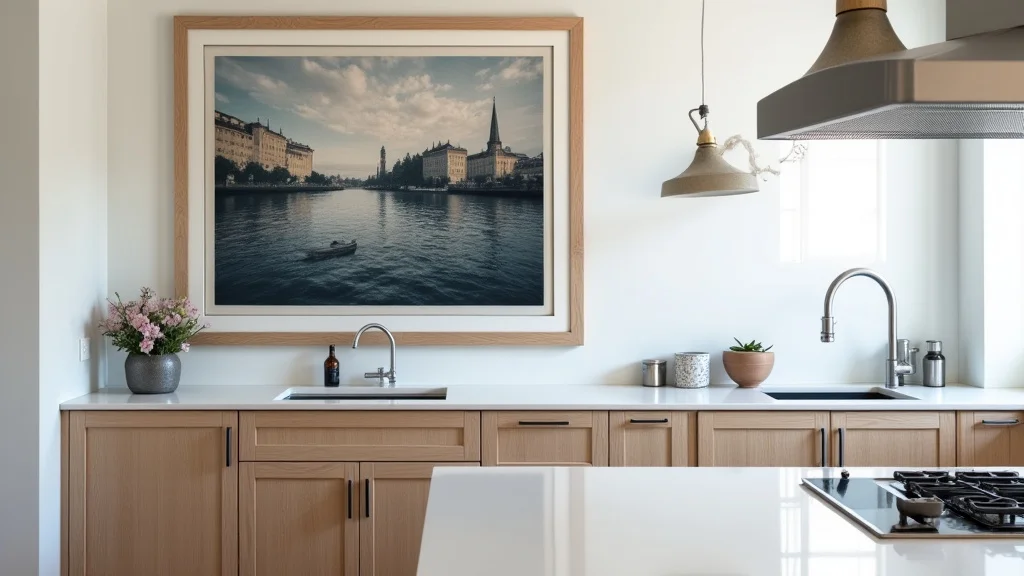
Have you ever stood in your kitchen, admired the empty wall space, and thought, “This needs a touch of art”? You search online, and suddenly, you’re bombarded with options, each with a different price tag. It can be confusing to know what’s a fair kitchen framed art price. This post will guide you through the factors that influence costs, helping you find beautiful art that fits your budget and style, so you can confidently decorate your culinary space.
Key Takeaways
- Art size and dimensions significantly impact the overall cost.
- The materials used for the frame and the artwork itself play a big role in price.
- Artist reputation and originality affect how much framed art sells for.
- Framing techniques and matting options add to the final kitchen framed art price.
- Where you buy your art, like galleries versus online stores, can change the cost.
Factors Influencing Kitchen Framed Art Price
The price of kitchen framed art is not set in stone. Many elements come together to determine how much you will spend. Thinking about these can help you make informed decisions.
Artwork Size and Dimensions
The most straightforward factor affecting price is the size of the art. Larger pieces require more materials, more time to create, and often more intricate designs. A small 8×10 inch print will naturally cost less than a grand 36×48 inch canvas.
This is because the surface area of the artwork increases quadratically with its dimensions. For example, doubling the width and height of a piece four times its area, thus requiring four times the amount of paint or ink and canvas.
- Small pieces (under 12×12 inches) are generally the most budget-friendly.
- Medium-sized art (12×12 to 24×36 inches) offers a good balance of impact and cost.
- Large statement pieces (over 36×48 inches) will command a higher kitchen framed art price.
The explanation for this difference is simple. A larger canvas means more material costs for the artist and potentially more shipping costs for you. Furthermore, larger pieces often require more complex compositions to maintain visual appeal, adding to the creation time and thus the overall value.
Artistic Medium and Materials
The materials used to create the art itself are a significant cost driver. Oil paintings on canvas will differ in price from watercolors on paper or digital prints. The quality of these materials also matters.
Archival-grade paper or acid-free mats will last longer but cost more than standard paper or mats that can yellow over time. The canvas weave, the pigment quality, and the type of ink used all contribute to the durability and appearance, and therefore the price.
- Original paintings using high-quality oils or acrylics are typically the most expensive.
- Limited edition prints made with archival inks on fine art paper offer a good middle ground.
- Open edition prints or digital reproductions on standard paper are usually the most affordable.
The reason behind this pricing is the longevity and uniqueness of the materials. Archival materials resist fading and degradation, preserving the artwork for decades. Original paintings are one-of-a-kind, making them inherently more valuable than reproductions.
Artist Reputation and Originality
The name behind the art holds significant weight. Established artists with a strong exhibition history and collector base can charge premium prices for their work. Even emerging artists who are gaining recognition may price their pieces higher due to their unique vision and skill.
Original artwork, meaning a one-of-a-kind piece created by the artist, will always be more expensive than a print or reproduction. This is because you are acquiring a unique object, not just a copy.
- Works by renowned artists can range from hundreds to thousands of dollars.
- Art from emerging artists offers a chance to own original work at a more accessible price point.
- Reproductions and open edition prints are typically the least expensive as they are mass-produced.
The market values originality and a proven track record. Collectors often invest in art as an asset, and the reputation of the artist, alongside the rarity of the piece, directly influences its investment potential and, consequently, its kitchen framed art price.
Framing Options and Their Cost Implications
The frame is more than just a border; it’s an integral part of the artwork presentation and a significant contributor to the overall kitchen framed art price. The style, material, and craftsmanship of the frame can dramatically alter the final cost.
Frame Materials
Frames come in various materials, each with its own price point. Solid wood frames, especially those made from hardwoods like oak, maple, or cherry, are premium choices and will be more expensive than frames made from composite materials or thinner, less substantial wood. Metal frames, like aluminum or brushed steel, can also be costly, depending on the finish and thickness.
- Solid hardwood frames offer durability and a classic look, increasing the price.
- Composite or MDF frames provide a more budget-friendly alternative.
- Metal frames can add a modern touch but often come at a higher cost.
The durability and aesthetic appeal of the material are key pricing factors. Solid wood frames are known for their longevity and the rich finish they can achieve, making them a favored choice for quality artwork.
Frame Styles and Finishes
Beyond the material, the style and finish of the frame matter. Ornate, hand-carved frames or those with intricate detailing will be more expensive than simple, minimalist designs. The finish—whether it’s a high-gloss lacquer, a distressed antique look, or a natural wood grain—also affects the price.
Matting and Glazing
Matting, the cardboard-like border between the artwork and the frame, serves both aesthetic and protective purposes. Double matting or using colored mats adds to the cost compared to a single, standard white mat. Glazing, the protective glass or acrylic covering the artwork, also varies in price. Standard glass is inexpensive, while non-glare, UV-protective, or shatterproof acrylic will increase the overall kitchen framed art price.
- Single standard matting is cost-effective.
- Double matting or custom colors add to the price.
- Standard glass is the most economical glazing option.
- UV-protective or non-glare glass offers better preservation and viewing experience at a higher cost.
The purpose of specialized glazing is to protect the artwork from environmental damage like fading caused by UV light and to prevent damage from dust or accidental impacts. These protective features add value and, consequently, cost.
Where to Buy Kitchen Framed Art
The retail environment where you purchase your artwork can also influence the kitchen framed art price. Different outlets offer varying selections and price ranges.
Online Retailers and Marketplaces
Online platforms offer a vast selection, often at competitive prices. Large e-commerce sites and specialized art marketplaces connect buyers with countless artists and sellers. This broad access allows for easy price comparison.
- Large online marketplaces like Amazon or Etsy host numerous art sellers.
- Specialized online art galleries often feature curated collections.
The advantage of online shopping is the sheer volume of choices and the ability to filter by price, size, and style from your own home. However, you miss the tactile experience of seeing the art in person.
Local Art Galleries and Studios
Visiting local art galleries and studios provides a more personal experience. You can see the artwork up close, speak directly with the artists, and often find unique pieces. Prices in galleries may be higher due to overhead costs but can represent a more direct investment in the artist.
- Galleries offer a curated selection and often feature local talent.
- Art studios allow direct interaction with artists and custom commission opportunities.
Buying directly from a studio means supporting the artist more directly. Prices might reflect the artist’s time, skill, and the demand for their original creations.
Home Decor Stores and Chains
Mass-produced framed art is readily available at large home decor stores and chain retailers. These options are generally the most affordable, catering to a broad consumer base looking for stylish, budget-friendly decor.
- These stores offer a wide variety of popular and trend-driven designs.
- Prices are typically lower due to bulk production and simpler materials.
The trade-off for affordability here is often in the quality of the materials and the originality of the design. However, for many, these pieces fulfill their decorative purpose perfectly.
Budgeting for Kitchen Framed Art
Determining your budget for kitchen framed art involves balancing your desires with your financial reality. Setting a clear price range from the outset can streamline your search and prevent impulse buys.
Understanding Price Tiers
Generally, kitchen framed art can be categorized into three main price tiers:
- Budget-Friendly (Under $100): This tier typically includes open edition prints, smaller unframed or simply framed pieces, and art from mass-produced decor lines.
- Mid-Range ($100 – $500): Here, you’ll find higher quality prints, limited edition reproductions, pieces by emerging artists, and custom-framed standard-sized art.
- Investment/Premium ($500+): This category encompasses original artwork by established or highly sought-after artists, large-scale pieces, or art with premium framing and materials.
The kitchen framed art price in these tiers reflects the factors discussed earlier—size, medium, artist reputation, and framing quality.
Tips for Saving Money
Several strategies can help you acquire beautiful kitchen art without overspending.
- Look for sales and promotions: Many online retailers and galleries have seasonal sales or offer discounts for first-time buyers.
- Consider unframed prints: Buying an unframed print and then having it custom-matted and framed at a local framer can sometimes be more cost-effective than buying a pre-framed piece, especially if the frame on the pre-framed item is not to your liking.
- Explore print-on-demand services: These services allow you to choose from a vast library of images and have them printed and framed to your specifications, often at competitive prices.
- DIY framing: For the truly budget-conscious, learning basic framing techniques can save significant money, though it requires time and effort.
A common scenario involves finding a stunning print online for $50. If a local framer charges $150 for a quality mat and wood frame, your total is $200. Buying the same piece pre-framed from a decor store might be $120, but the quality might not be as high.
Common Myths Debunked
Frequently Asked Questions
Question: How much does kitchen framed art typically cost
Answer: The price for kitchen framed art varies widely, from under $50 for small, mass-produced prints to thousands of dollars for original works by well-known artists. A good mid-range option often falls between $100 and $500.
Question: Is it worth spending more on original art
Answer: For some, yes, as original art is a unique piece that can increase in value and offer a deeper connection. For others, high-quality prints with good framing serve their decorative purpose just as well at a lower cost.
Question: Can I find good kitchen art on a tight budget
Answer: Absolutely. Look for open edition prints, sale items, or consider unframed art that you can frame yourself or affordably at a local framer. DIY framing can also significantly reduce costs.
Question: Does the frame material affect the kitchen framed art price
Answer: Yes, significantly. Solid wood frames, especially hardwoods, are more expensive than composite materials or thinner plastic frames. Metal frames also vary in price based on the type and finish.
Question: Where is the best place to buy kitchen art
Answer: The best place depends on your budget and what you’re looking for. Online marketplaces offer variety and competitive prices, while local galleries provide unique pieces and direct artist support. Home decor stores are great for affordable, trendy options.
Conclusion
The kitchen framed art price depends on many factors, from size and materials to the artist’s fame and where you buy. You can find beautiful art at any budget by understanding these influences. Consider the artwork size, the quality of materials used, and the reputation of the artist. Framing choices also play a key role. By comparing options from online stores, galleries, and home decor shops, you can confidently select the perfect piece to enhance your kitchen’s look and feel.