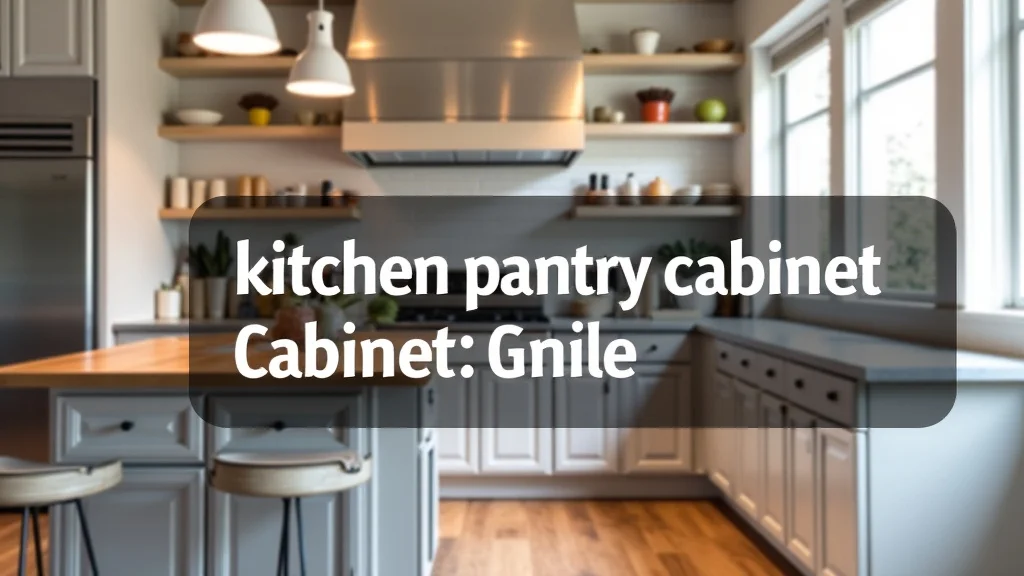
When you’re planning your kitchen renovation, one of the biggest questions is how much will everything cost. You might be dreaming of that perfect pantry cabinet to keep your dry goods organized and your kitchen looking tidy. But then the big question pops up: what is the actual kitchen pantry cabinet price?
It’s a common concern for homeowners looking to balance style and budget. This guide will help you understand the factors that influence cost and what you can expect to spend.
Key Takeaways
- Kitchen pantry cabinet prices vary widely based on material, size, and features.
- Stock cabinets are the most budget-friendly option for pantry storage.
- Custom cabinets offer the most flexibility but come with a higher price tag.
- Installation costs can significantly impact the total kitchen pantry cabinet price.
- Hardware and finishes play a role in the overall expense.
- DIY installation can save money but requires specific skills.
Understanding Kitchen Pantry Cabinet Price Factors
The cost of a kitchen pantry cabinet is not a one-size-fits-all answer. Many elements combine to determine the final price you’ll pay. These factors range from the basic materials used to the complexity of the design and any special features you might want.
Understanding these elements helps you make informed decisions and budget more effectively. Knowing what drives up or lowers the price allows you to prioritize where your money goes.
Material Matters
The type of material used for your pantry cabinet is a primary driver of its price. Wood is a popular choice, but different types of wood have distinct costs. Plywood, often used for cabinet boxes, is generally more affordable and durable than solid wood.
Solid wood, like oak or maple, offers a premium look and feel but at a higher expense. Particleboard and MDF (Medium-Density Fiberboard) are the most budget-friendly options, often used for doors and drawer fronts, but they may not be as durable or moisture-resistant as solid wood or high-quality plywood.
- Solid Wood Cabinets: These offer the best in terms of durability and aesthetics. Hardwoods like maple, cherry, and oak are common. They are strong and can be refinished over time. However, they are also the most expensive option for cabinets due to the cost of the raw material and the skilled labor involved in crafting them. Expect solid wood to add a significant amount to your kitchen pantry cabinet price.
- Plywood Cabinets: Plywood is made by layering thin sheets of wood veneer. It’s strong, stable, and resistant to warping and shrinking. Cabinet boxes are often made from plywood, with solid wood or MDF used for doors and drawer fronts. This is a good mid-range option, offering a balance between cost and durability. It’s a popular choice for many homeowners due to its longevity and value.
- MDF and Particleboard Cabinets: MDF is made from wood fibers mixed with resin and wax. Particleboard is made from wood chips and sawdust. Both are less expensive than solid wood or plywood. They are often used for cabinet doors, drawer fronts, or even entire cabinet boxes in very budget-conscious projects. While affordable, they can be susceptible to moisture damage and may not hold up as well to heavy use over the years. Their lower cost makes them attractive when trying to reduce the overall kitchen pantry cabinet price.
Size and Configuration
The physical dimensions of the pantry cabinet, as well as its internal configuration, directly impact the kitchen pantry cabinet price. Larger cabinets require more materials and labor, naturally increasing the cost. Beyond just height and width, consider depth.
Deeper cabinets might offer more storage but can also be more expensive. The layout – whether it’s a single tall unit, a set of base and upper cabinets, or a specialized pull-out pantry – also plays a role. More intricate designs or multiple sections will cost more than a simple, single-door unit.
- Standard Sizes vs. Custom Dimensions: Off-the-shelf pantry cabinets come in a range of standard widths, heights, and depths. These are typically more affordable because they are mass-produced. If your kitchen space requires specific dimensions that fall outside these standard offerings, you will likely need to opt for semi-custom or fully custom cabinets. This customization comes at a premium, as the cabinets are built to your exact specifications, requiring more specialized design and construction.
- Internal Organization Features: The interior of your pantry cabinet can also influence the price. Basic shelves are the most economical. However, adding features like pull-out shelves, drawer organizers, spice racks, wine racks, or even built-in lighting will increase the overall kitchen pantry cabinet price. These accessories add functionality but also add to the material and labor costs.
Cabinet Construction Type
The way cabinets are constructed also affects their price. There are generally three main types of cabinetry available on the market: stock, semi-custom, and custom. Each offers a different balance of price, flexibility, and quality.
- Stock Cabinets: These are pre-manufactured in standard sizes and configurations and are ready to buy off the shelf from big-box stores or cabinet retailers. They are the most affordable option and can be installed relatively quickly. However, their selection of styles, sizes, and finishes is limited. If you can find stock cabinets that fit your space and aesthetic, they are an excellent way to keep the kitchen pantry cabinet price low.
- Semi-Custom Cabinets: These cabinets offer more options than stock cabinets. You can typically choose from a wider range of door styles, finishes, storage solutions, and slightly more flexibility in sizing, often in increments of inches. They bridge the gap between the affordability of stock cabinets and the premium of custom ones. Semi-custom cabinets provide a good balance for homeowners who want more personalized features without the highest cost.
- Custom Cabinets: These are built to your exact specifications, allowing for unlimited choices in design, materials, finishes, and dimensions. If you have unique kitchen layouts, specific storage needs, or very particular aesthetic preferences, custom cabinets are the way to go. They offer the highest level of quality and personalization but also come with the highest kitchen pantry cabinet price and often longer lead times.
Finishes and Hardware
The exterior appearance of your pantry cabinet is determined by its finish and hardware. These elements, while seemingly small, can add up and influence the overall kitchen pantry cabinet price. The type of paint or stain, its application, and the quality of the hardware can significantly alter the look and cost.
- Paint vs. Stain: Painted finishes are common and can offer a clean, modern look. The cost can vary depending on the quality of the paint and the complexity of the finish. Stained finishes reveal the natural grain of the wood, offering a warmer, more traditional feel. The type of stain and the wood it’s applied to will affect the price. High-end finishes often involve multiple layers and meticulous application, contributing to a higher cost.
- Hardware Selection: Cabinet hardware includes knobs, pulls, hinges, and drawer slides. While basic hardware is relatively inexpensive, opting for premium materials like brushed nickel, polished chrome, or solid brass can add substantially to the cost. The style of the hardware also plays a role; intricate designs or specialized finishes will be more costly than simple, standard options.
Installation Costs
The kitchen pantry cabinet price isn’t just about the cabinet itself; installation is a significant part of the total expenditure. The cost of installation depends on whether you hire a professional contractor or opt for a DIY approach.
- Professional Installation: Hiring experienced cabinet installers ensures that your pantry cabinets are fitted correctly, securely, and aesthetically. Professional installation costs can range from a few hundred to several thousand dollars, depending on the complexity of the job, the number of cabinets, and the prevailing labor rates in your area. This cost includes their expertise, tools, and time.
- DIY Installation Savings: If you have woodworking skills and the right tools, you might consider installing the cabinets yourself to save money. However, DIY installation requires precision and time. Mistakes can be costly to fix, potentially negating any savings. It’s important to be realistic about your abilities and the time commitment involved before choosing this route to reduce the kitchen pantry cabinet price.
Case Study: Budget-Friendly Pantry Upgrade
The Miller family wanted to improve their kitchen organization without a full renovation. They decided to add a dedicated pantry cabinet. They opted for stock cabinets from a local home improvement store, choosing a simple white shaker door style.
The cabinet was a standard 30-inch wide, 84-inch high unit. They selected basic metal pull handles. The cabinet itself cost around $500.
They found a local handyman who charged $200 to install it, including mounting it securely to the wall and adding a few extra shelves inside. The total kitchen pantry cabinet price for their upgrade was $700, significantly less than a custom solution.
Average Kitchen Pantry Cabinet Price Ranges
To give you a clearer picture, here are some average price ranges for different types of pantry cabinets. Keep in mind these are estimates and can vary widely by region, brand, and specific features.
| Cabinet Type | Estimated Price Range | Typical Features |
|---|---|---|
| Stock Pantry Cabinets | $200 – $800 | Standard sizes, limited styles, basic shelves. |
| Semi-Custom Pantry Cabinets | $700 – $2,500 | More size options, various door styles, some organizational features. |
| Custom Pantry Cabinets | $1,500 – $5,000+ | Any size, unlimited styles, premium materials, advanced organization. |
| Installation (Professional) | $200 – $1,000+ | Varies by complexity and labor rates. |
For example, a simple 18-inch wide stock pantry cabinet might be on the lower end, around $200-$300. A larger, 36-inch wide stock pantry with more shelves could reach $600-$800. Moving into semi-custom, you might get a 30-inch wide pantry with pull-out drawers for $1,000-$1,800.
A truly custom-built pantry, perhaps with a unique design or premium wood, could easily start at $2,000 and go up significantly depending on the features and materials. These figures help illustrate the broad spectrum of the kitchen pantry cabinet price.
Maximizing Your Storage and Budget
When looking to purchase a kitchen pantry cabinet, it’s wise to consider how to get the most storage for your money. This involves smart planning and prioritizing. Thinking about what you need to store and how often you access it can guide your choices.
- Assess Your Storage Needs: Before you even look at cabinets, take inventory of what you plan to store. Do you have many large boxes, or mostly smaller jars and cans? Are you storing small appliances? Knowing this will help you decide on the necessary height, width, and depth, and whether adjustable shelves or specialized pull-outs are more important. This analysis prevents overspending on features you won’t use.
- Prioritize Features: If your budget is tight, identify the non-negotiable features. Is it the look of the cabinet door, the number of shelves, or the ease of access to items? You might be able to save money by choosing a less expensive wood type for the cabinet box but investing in high-quality pull-out shelves for the interior.
- Look for Sales and Discounts: Many cabinet retailers, both online and in physical stores, have periodic sales. Keeping an eye out for these promotions can lead to significant savings on your kitchen pantry cabinet price. Also, consider buying cabinets during holiday sales events.
- Consider Refurbishing Existing Spaces: Instead of buying a brand-new cabinet unit, you might be able to convert an existing closet or nook into pantry space by adding shelves and organizers. This can be a very cost-effective solution.
Common Myths Debunked
Myth 1: All pantry cabinets look the same.
Reality: Pantry cabinets come in a vast array of styles, from sleek modern designs to traditional shaker and rustic farmhouse looks. The materials, finishes, door types, and hardware all contribute to a unique appearance. You can find a pantry cabinet to perfectly match your kitchen’s existing decor or to be a statement piece.
Myth 2: You need a huge kitchen for a pantry cabinet.
Reality: Pantry cabinets are available in many sizes, including narrow units that can fit into small spaces or corners. Even a small kitchen can benefit from an efficient pantry cabinet that maximizes vertical storage. Solutions exist for almost any kitchen footprint, making it accessible for most homeowners to improve their storage.
Myth 3: Custom cabinets are always prohibitively expensive.
Reality: While custom cabinets are the most expensive option, the price can be managed by making smart choices. Opting for a simpler door style, a less exotic wood, or fewer intricate features can bring the cost down. Sometimes, the long-term durability and perfect fit of custom cabinets justify the investment.
Myth 4: Hardware doesn’t significantly affect cabinet price.
Reality: The cost of hardware can add up surprisingly quickly, especially for larger cabinets or when choosing premium materials like solid brass or designer pulls. While basic knobs might cost a few dollars each, high-end hardware can cost $20 or more per piece. Over an entire pantry cabinet, this can become a substantial part of the kitchen pantry cabinet price.
Frequently Asked Questions
Question: What is the cheapest way to get pantry storage?
Answer: The cheapest way is often to use stock cabinets, convert an existing closet with shelving, or buy freestanding pantry units that do not require installation into your kitchen structure.
Question: How much does professional installation typically cost?
Answer: Professional installation costs can range from $200 to over $1,000, depending on the complexity of the installation, the number of cabinets, and the local labor rates.
Question: Are IKEA pantry cabinets a good budget option?
Answer: Yes, IKEA offers a range of affordable pantry cabinets and storage solutions. They are generally considered a good budget option, offering decent quality for the price, especially for those comfortable with self-assembly.
Question: What are the most durable materials for pantry cabinets?
Answer: Solid wood and high-quality plywood are generally considered the most durable materials for pantry cabinets. They offer strength and longevity, resisting wear and tear better than MDF or particleboard over time.
Question: Can I get a pantry cabinet designed to match my existing kitchen cabinets?
Answer: Yes, especially if you opt for semi-custom or custom cabinets. You can often match door styles, finishes, and even hardware to seamlessly integrate a new pantry cabinet with your existing kitchen cabinetry.
Final Thoughts
The kitchen pantry cabinet price is a flexible figure. You can find options from a few hundred to several thousand dollars. Carefully consider materials, size, construction type, and installation.
Prioritizing needs and exploring different options will help you find the perfect pantry cabinet for your kitchen and budget, ensuring you get great storage.