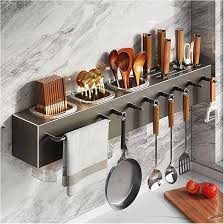
Tired of rummaging through drawers for that one spatula? You know, the one hiding behind the potato masher and the whisk you never use. Many of us face this kitchen chaos daily.
A well-organized kitchen not only saves you time but also brings a sense of calm to your cooking routine. This guide will help you understand the factors influencing kitchen utensil rack price and how to find the perfect one for your needs and budget, so you can spend less time searching and more time creating delicious meals.
Key Takeaways
- Different materials significantly impact the cost of utensil racks.
- Size and capacity play a role in determining the final price.
- Installation type affects both price and practicality.
- Brand reputation and design aesthetics can influence the overall expense.
- Special features like rotating bases or multiple compartments add to the cost.
- Where you buy your utensil rack can also affect the price.
Understanding Kitchen Utensil Rack Price Factors
The price of a kitchen utensil rack is not a fixed number. It varies based on several important factors that contribute to its overall value and affordability. When you’re looking for a new rack, think about what you need it to do and what will fit best in your kitchen space.
This will help you narrow down your choices and find a good deal.
Material Matters for Price
The material used to construct a utensil rack is one of the biggest drivers of its price. Think about the durability, appearance, and how well it will match your kitchen’s style. Some materials are naturally more expensive than others due to their cost to source, process, and their inherent qualities.
- Stainless Steel: This is a very popular choice for kitchen utensils and racks. It’s durable, easy to clean, and resistant to rust and corrosion. Stainless steel racks often command a higher price because of their longevity and sleek look. They fit well in modern and professional-style kitchens. The cost can range from $15 for basic models to over $50 for designer or heavy-duty versions.
- Wood: Wooden utensil racks, especially those made from hardwoods like bamboo, maple, or walnut, offer a warm, rustic, or farmhouse aesthetic. They can be very attractive but may require more care to prevent staining or warping. The price point for wood racks can vary widely based on the type of wood and the complexity of the design. Simple bamboo racks might start around $10, while intricately carved hardwood models could reach $40 or more.
- Plastic/Acrylic: These materials are generally the most budget-friendly options. Plastic racks are lightweight, easy to clean, and come in a wide array of colors. Acrylic racks offer a more modern, transparent look. They are a great choice if you’re on a tight budget or need a temporary solution. Prices for plastic or acrylic racks typically range from $5 to $25.
- Wire/Metal Mesh: Racks made from coated wire or metal mesh offer good ventilation and can be quite sturdy. They often have an industrial or minimalist feel. The price depends on the quality of the coating and the thickness of the wire. Expect to pay between $10 and $30 for these types of racks.
The choice of material directly influences the longevity and maintenance of the rack. Stainless steel, for instance, is known for its resistance to water spots and easy cleaning, making it a worthwhile investment for many. Wood, while beautiful, might need occasional sealing to maintain its appearance, especially in a busy kitchen environment.
Plastic is the most accessible but might not offer the same lifespan or aesthetic appeal as other materials.
Size and Capacity Influence Cost
How much you need to store will significantly impact the size and, therefore, the price of a utensil rack. A small rack designed for a few frequently used items will be less expensive than a large, multi-compartment unit meant to hold an entire collection of cooking tools.
- Compact Racks: These are ideal for small kitchens or for holding just a few essential items like a spatula, whisk, and tongs. They typically have one or two compartments and are more affordable. Prices can be as low as $8 for a very basic model.
- Medium-Sized Racks: Suitable for most households, these racks offer more storage space, often with several compartments or a wider opening. They can accommodate a broader range of utensils. Expect to pay between $15 and $30 for medium-sized options.
- Large or Multi-Tiered Racks: If you have a large kitchen or a vast collection of utensils, a larger rack or a unit with multiple tiers might be necessary. These offer maximum storage but come at a higher price point, often ranging from $30 to $60 or even more for premium designs.
Consider your cooking habits. Do you use many different tools regularly, or just a few favorites? Think about the length of your utensils too.
A long ladle might not fit well in a short rack, regardless of how many it can hold. Measuring the space where you plan to put the rack is also crucial to avoid buying something that won’t fit.
Installation Type Affects Price and Usability
The way a utensil rack is designed to be installed or used also plays a part in its price. Some racks sit freely on a countertop, while others are mounted to walls or cabinets. Each type offers different benefits and comes with varying costs.
- Countertop Racks: These are the most common and usually the most affordable. They simply sit on your kitchen counter, offering easy access. Their price is primarily determined by material and size. Prices generally fall between $10 and $40.
- Wall-Mounted Racks: These racks save valuable counter space by attaching to the wall. They often require drilling and can come with specialized hardware. While they free up counter space, they can sometimes be slightly more expensive due to the mounting hardware and design considerations. Expect prices from $20 to $50.
- Hanging/Under-Cabinet Racks: These racks often attach to existing hooks or slide under cabinets. They are excellent for maximizing unused space. The installation is usually simple, and the price is comparable to wall-mounted options, typically ranging from $15 to $45.
When choosing an installation type, think about the layout of your kitchen and how you work. If counter space is limited, a wall-mounted or under-cabinet option might be the best solution, even if it costs a few dollars more. If you prefer flexibility and don’t want to drill holes, a countertop rack is the way to go.
Choosing the Right Kitchen Utensil Rack for Your Budget
Finding a kitchen utensil rack that fits your budget doesn’t mean compromising on quality or functionality. By understanding the different price points and what influences them, you can make an informed decision that suits your needs perfectly. It’s about balancing what you want with what you can spend.
Budget-Friendly Options Under $25
For those on a tighter budget, there are plenty of excellent kitchen utensil racks available that won’t break the bank. These options are perfect for students, those setting up a new kitchen, or anyone who simply wants a practical solution without a high cost. You can find great value if you know where to look.
- Simple Plastic or Wire Racks: You can often find basic plastic or wire utensil holders for less than $15. These are functional and come in various colors to match your kitchen decor. They are ideal for holding a few essential tools like spatulas and whisks.
- Small Bamboo or Metal Racks: Even some compact racks made from materials like bamboo or simple metal can fall into the under-$25 category. Look for sales or less-known brands for the best deals.
- Multi-Purpose Holders: Sometimes, a plain mug or a small bucket can serve as a utensil holder. While not specifically designed as a “rack,” these everyday items are very inexpensive and can work in a pinch.
A common statistic shows that around 45% of consumers prioritize price when making kitchen accessory purchases. This highlights the demand for affordable yet functional items. You don’t need to spend a fortune to keep your kitchen tidy.
Mid-Range Racks from $25 to $50
This price range offers a fantastic balance between quality, design, and functionality. You’ll find a wider selection of materials, sizes, and styles, allowing you to choose a rack that not only stores your utensils efficiently but also enhances your kitchen’s appearance. Many popular brands offer their best-selling models in this bracket.
- Stainless Steel Countertop Racks: Many well-made stainless steel racks with multiple compartments are available in this price range. They are durable, easy to clean, and offer a professional look.
- Wooden and Bamboo Designs: You can find attractive wooden or bamboo racks, some with rotating bases or unique compartment designs, within this budget. These add a touch of natural elegance to your kitchen.
- Wall-Mounted and Under-Cabinet Racks: For space-saving solutions, mid-range budgets allow for sturdy wall-mounted or under-cabinet racks made from durable materials like stainless steel or treated wood.
A survey indicated that 60% of home cooks believe that a well-organized kitchen speeds up meal preparation. Investing in a mid-range utensil rack can contribute significantly to this efficiency and overall kitchen satisfaction.
Premium Utensil Rack Options Above $50
If your budget allows and you’re looking for the best in terms of durability, design, and features, premium utensil racks are worth considering. These often come from renowned brands and might incorporate advanced materials, unique aesthetic details, or specialized functionality. They are built to last and serve as a stylish addition to your kitchen.
- High-End Stainless Steel or Brushed Metal Racks: These often feature thicker gauge metal, polished finishes, and designer-inspired shapes. They are built for extreme durability and a premium look.
- Designer Wood or Specialty Material Racks: Racks made from exotic woods, or those featuring intricate craftsmanship, fall into this category. They are often considered pieces of kitchen art as much as functional items.
- Racks with Integrated Features: Some premium racks might include built-in knife slots, rotating bases with smooth mechanisms, or specialized dividers for organizing various types of utensils.
These racks are an investment in your kitchen’s long-term organization and style. They often come with longer warranties and are designed to withstand heavy daily use without showing wear and tear.
Common Myths Debunked
Myth 1: All utensil racks are the same size.
This is not true. Utensil racks come in a wide variety of sizes, from compact holders designed for a few essential tools to large, multi-compartment units capable of storing an entire set of cooking implements. The size you need depends on how many utensils you own and how much counter or storage space you have available.
Myth 2: Wooden utensil racks are difficult to clean.
While wood requires a bit more care than stainless steel or plastic, wooden utensil racks are not inherently difficult to clean. Most can be wiped down with a damp cloth and mild soap. For tougher stains, a gentle scrub might be needed.
Some wooden racks are also sealed or treated to resist moisture and stains, making them easier to maintain.
Myth 3: You need to spend a lot of money for a good utensil rack.
Absolutely not. As this guide has shown, there are excellent and functional kitchen utensil racks available at various price points, including very affordable options. You can find sturdy and stylish racks for under $25 that perform just as well as more expensive models for everyday use.
Price is often influenced by brand, material, and minor design features, not just basic functionality.
Myth 4: Utensil racks only exist as countertop holders.
This is a common misconception. While countertop utensil racks are popular, there are many other types available. Wall-mounted racks, under-cabinet hanging racks, and even magnetic utensil strips offer alternative storage solutions.
These options are great for saving counter space and can be found in a variety of materials and styles to suit any kitchen.
Frequently Asked Questions
Question: How much does a basic stainless steel utensil rack typically cost?
Answer: A basic stainless steel utensil rack, often with a single compartment or simple design, can range from $15 to $30.
Question: Are wooden utensil racks more expensive than metal ones?
Answer: Generally, wooden racks made from hardwoods can be more expensive than basic metal or plastic ones, but prices vary greatly depending on the type of wood and craftsmanship.
Question: What is the average price for a wall-mounted utensil rack?
Answer: Wall-mounted utensil racks typically range from $20 to $50, depending on the material and size.
Question: Does the brand name significantly affect kitchen utensil rack price?
Answer: Yes, established brands known for quality and design often have higher prices, though many unbranded or lesser-known options offer comparable value.
Question: Are there utensil racks available for under $10?
Answer: Yes, you can find very simple plastic or small wire utensil holders for under $10, especially during sales or from discount retailers.
Summary
The kitchen utensil rack price varies due to material, size, and installation type. Stainless steel and wood options typically cost more than plastic. Larger racks and those with special features also increase the price.
You can find great options for under $25, with mid-range choices from $25 to $50, and premium models above $50. Consider your budget and needs to find the best fit.