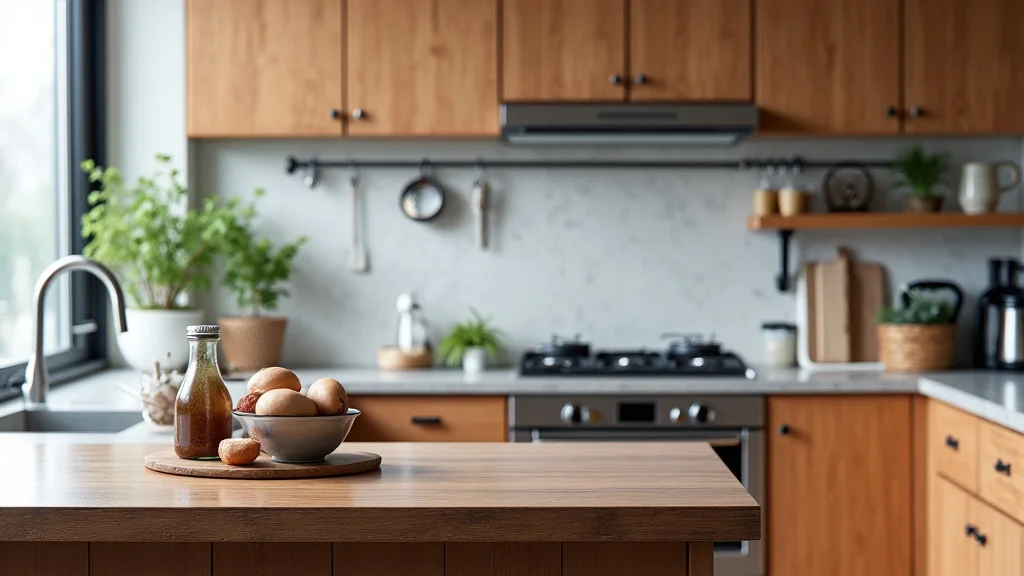
Planning a kitchen remodel often brings up questions about costs. You might be looking at beautiful wooden kitchen cabinets, picturing your dream kitchen, but then the big question hits: how much will they cost? It’s a common concern, and understanding the factors that influence the wooden kitchen cabinet price is key to budgeting effectively. This guide will break down what goes into cabinet costs, helping you make informed decisions and avoid sticker shock.
Key Takeaways
- Cabinet material significantly impacts cost, with hardwoods being pricier than softer woods.
- Cabinet construction methods, like solid wood versus particleboard, affect durability and price.
- Custom cabinets are more expensive than semi-custom or stock options.
- Hardware choices, such as hinges and drawer slides, add to the overall expense.
- Finishing options, from simple stains to complex paints, influence the final price.
- The size and complexity of your kitchen layout play a role in cabinet quantity and cost.
Understanding Wooden Kitchen Cabinet Price Factors
The price of wooden kitchen cabinets is not a single, fixed number. It’s a complex equation with many variables that can make a significant difference. When you’re budgeting for your kitchen renovation, it’s crucial to understand these factors to get an accurate estimate and find cabinets that fit both your style and your wallet.
Wood Types and Their Costs
Different types of wood have vastly different price points. Hardwoods like maple, cherry, and oak are generally more expensive than softwoods such as pine or poplar. This is because hardwoods are denser, more durable, and often have more attractive grain patterns.
Hardwood Options
Maple is a popular choice for kitchen cabinets. It’s known for its strength, smooth grain, and ability to take stains beautifully, giving it a premium feel. However, this quality comes at a higher cost compared to other woods.
Cherry wood offers a rich, warm tone that darkens gracefully with age, developing a deep patina. Its natural beauty makes it a favorite, but its cost reflects this elegance.
Oak is a classic choice, recognizable for its distinctive grain patterns. It’s very durable and widely available, making it a more budget-friendly hardwood option compared to maple or cherry, but still more expensive than softwoods.
Softwood Options
Pine is a softwood that is less expensive than hardwoods. It’s lighter in color and has a more pronounced, knotty grain. While it’s more prone to dents and scratches, it offers a rustic charm and is a great choice for a more casual or farmhouse-style kitchen.
Poplar is another softwood that is relatively inexpensive. It has a straighter grain and can be painted very smoothly, making it a good option if you plan to paint your cabinets a specific color rather than stain them.
The choice of wood directly impacts the wooden kitchen cabinet price. For instance, a set of maple cabinets might cost 20-30% more than a similar set made from oak.
Cabinet Construction Methods
Beyond the type of wood, how the cabinets are built also plays a big role in their cost and longevity. Cabinet construction methods range from basic to highly sophisticated, affecting both the initial price and how well the cabinets hold up over time.
Solid Wood Construction
Cabinets made entirely from solid wood are the most durable and often the most expensive. This means that the cabinet doors, drawer fronts, and cabinet boxes are all constructed from solid pieces of wood.
This type of construction is valued for its strength and resistance to warping or damage. It’s a long-term investment for your kitchen.
Plywood and Particleboard
Many cabinets, especially more affordable options, use plywood for the cabinet boxes and particleboard for the back panels or drawer bottoms. Plywood is made from thin layers of wood veneer glued together, offering good stability.
Particleboard is made from wood chips and sawdust mixed with resin and compressed. While less durable and susceptible to moisture damage than plywood or solid wood, it’s a significantly cheaper material.
The difference in material can mean a substantial saving. A kitchen with plywood boxes and solid wood fronts will be more affordable than one with all solid wood construction.
Custom versus Stock Cabinets
The way cabinets are manufactured and sold also impacts their price. You have a few main options when buying kitchen cabinets: stock, semi-custom, and custom.
Stock Cabinets
Stock cabinets are mass-produced in standard sizes and configurations. They are the most affordable option and are readily available from big-box stores and home improvement centers.
Because they are made in large batches, the cost per cabinet is lower. However, your design choices and sizing options are limited.
Semi-Custom Cabinets
Semi-custom cabinets offer a middle ground. They are built to order from a wider range of standard sizes, styles, and finishes. This allows for more flexibility than stock cabinets.
You can often choose different door styles, wood types, and finishes. The manufacturing process is more involved, leading to a higher price than stock cabinets but more personalization.
Custom Cabinets
Custom cabinets are built from scratch to your exact specifications. You can choose every detail, from the wood and finish to the precise dimensions and unique features.
This level of personalization offers the greatest flexibility but comes with the highest cost. Custom cabinets are ideal for unique kitchen layouts or when you have very specific design requirements.
A set of custom oak cabinets for a medium-sized kitchen could easily cost twice as much as a similar set of stock maple cabinets.
Hardware and Accessories
The price of cabinets doesn’t stop at the wood and construction. The hardware—hinges, drawer slides, handles, and pulls—adds to the final cost.
Hinges and Drawer Slides
The quality of hinges and drawer slides can significantly affect both the price and the user experience. Soft-close hinges and full-extension drawer slides are more expensive but provide a smoother, quieter operation.
Basic metal hinges and standard drawer slides are cheaper. For example, high-quality European-style hinges with soft-close mechanisms can add $10-$20 per door compared to standard hinges.
Handles and Pulls
Cabinet hardware like handles and pulls come in a vast array of styles, materials, and finishes, from simple knobs to ornate pulls. The price can range from a few dollars each to $50 or more for designer pieces.
A kitchen with 30 doors and drawers could see its cost increase by several hundred dollars just from the choice of hardware.
Finishing Options
The finish applied to your wooden cabinets is more than just aesthetics; it’s also about protection and can be a significant cost factor.
Stains
Stains penetrate the wood to enhance its natural color and grain. Light stains allow the wood’s natural beauty to show through, while darker stains can create a richer, more dramatic look. The complexity of the staining process can affect the price.
Paints and Glazes
Painting cabinets offers a completely different look. While paint can be more affordable than some premium stains, intricate multi-step painting processes, such as distressed finishes or glazes, can add to the cost.
The preparation required for a smooth, durable painted finish often involves more labor, increasing the price.
Natural vs. Painted Finishes
Natural wood finishes, often sealed with a clear coat, tend to be less expensive than custom paint jobs. However, highly figured woods that require meticulous finishing to showcase their beauty can command higher prices.
Kitchen Size and Layout Complexity
The physical dimensions of your kitchen and how the cabinets are arranged are fundamental to the overall wooden kitchen cabinet price.
Square Footage and Cabinet Quantity
Larger kitchens require more cabinets. The total square footage of your kitchen directly translates to the number of base cabinets, wall cabinets, and potentially pantry units you’ll need.
The more cabinets you order, the higher the total cost will be, even if the per-cabinet price remains the same.
Layout and Special Units
Complex kitchen layouts, such as L-shaped or U-shaped kitchens with many corners and angles, can increase costs. These layouts often require specialized corner cabinets, lazy Susans, or filler pieces, which can be more expensive than standard cabinets.
A kitchen with many custom features like pull-out spice racks, trash bins, or appliance garages will also add to the overall price.
For example, a standard 10×10 kitchen might need 15-20 cabinet units. A similarly sized kitchen with an island and more intricate design could require 25-30 units, significantly increasing the total cabinet bill.
Understanding Cabinet Construction Materials
The materials used to build kitchen cabinets are critical to their price, durability, and appearance. While we often think of wood, the specific type and how it’s used make a difference.
Solid Wood Components
Solid wood refers to lumber that has been sawn directly from trees. For cabinets, this typically means solid wood for doors, drawer fronts, and sometimes cabinet frames.
Pros and Cons of Solid Wood
Pros: It is the most durable and aesthetically pleasing option. Solid wood can be sanded and refinished multiple times, extending the life of the cabinets. It also offers natural beauty and warmth.
Cons: Solid wood can be prone to expanding and contracting with changes in humidity, which can lead to warping or cracking over time, especially in poorly maintained environments. It is also the most expensive option.
A study by the National Association of Home Builders found that custom cabinets made with solid hardwood doors and plywood boxes can add 10-15% to the overall kitchen remodel cost compared to cabinets with less expensive materials.
Plywood Construction
Plywood is an engineered wood product made from thin layers, or plies, of wood veneer that are glued together with adjacent layers having their wood grain rotated up to 90 degrees to one another. This cross-graining helps to make the plywood stronger and less prone to shrinking or swelling.
Advantages of Plywood
Plywood is significantly more stable than solid wood, meaning it’s less likely to warp, crack, or split. It also offers excellent structural integrity and is a common choice for cabinet boxes (the main carcass of the cabinet).
High-quality plywood, often referred to as furniture-grade plywood, can be very durable and is a good balance between cost and performance.
Medium-Density Fiberboard (MDF)
MDF is an engineered wood product made by breaking down hardwood or softwood into wood fibers, often in a defibrator, combining it with wax and a resin binder, and forming panels by applying high temperature and pressure. It has a smooth, uniform surface and is very stable.
When MDF is Used
MDF is often used for cabinet doors, especially for painted finishes. Its smooth surface allows for a very clean, flat finish when painted. It’s also more dimensionally stable than solid wood and generally less expensive.
However, MDF is susceptible to moisture damage and can sag over time if used for very wide shelves without proper support. It cannot be easily refinished like solid wood.
A common misconception is that all engineered wood is low quality. High-density fiberboard and furniture-grade plywood are excellent materials for cabinet construction.
Cabinet Styles and Their Price Impact
The style of your kitchen cabinets not only dictates the aesthetic but also influences the manufacturing complexity and, consequently, the price.
Shaker Style Cabinets
Shaker cabinets are characterized by their simple, clean lines. They feature a flat center panel and a rectangular frame around it. This design is timeless and versatile, fitting well in both modern and traditional kitchens.
Why Shaker is Popular
Its popularity stems from its simplicity, making it relatively straightforward to manufacture. This often translates to a more accessible price point compared to more ornate styles.
For example, a set of Shaker-style maple cabinets might be 10-15% less expensive than custom-designed cabinets with elaborate carvings.
Slab or Flat-Panel Cabinets
Slab cabinets are the epitome of minimalist design. They feature a completely flat, unadorned door and drawer front. This style is popular in contemporary and modern kitchens.
Cost-Effectiveness of Slab Doors
Slab doors are generally the most cost-effective to produce because they require less intricate woodworking. A simple, flat piece of wood or material is all that’s needed.
Raised-Panel and Recessed-Panel Cabinets
Raised-panel cabinets have a center panel that is set slightly higher than the surrounding frame, creating a subtle dimensionality. Recessed-panel cabinets have a center panel that is set lower than the frame.
Increased Complexity and Cost
Both raised and recessed panels add complexity to the manufacturing process. Creating these distinct profiles requires more precise cuts and assembly.
This added craftsmanship means these styles are typically more expensive than flat-panel or Shaker doors. The difference could be anywhere from 5% to 20% more, depending on the intricacy of the panel design.
Beadboard and Other Textured Styles
Beadboard cabinets have a series of parallel grooves running vertically, mimicking the look of beadboard paneling. This style often evokes a cottage or coastal feel.
Manufacturing and Price
Producing the textured surface requires specialized milling techniques. This can add to the cost, though it’s usually less expensive than highly detailed carved designs.
The choice of style should always be balanced with the wooden kitchen cabinet price range you’ve set for your renovation.
The Role of Finish and Hardware in Cabinet Pricing
The final touches on your cabinets—the finish and the hardware—can significantly alter the overall cost, often in ways homeowners don’t anticipate.
Finish Application Processes
The way a cabinet is finished impacts both its appearance and its durability, and different processes carry different price tags.
Stains and Sealers
Applying a stain and a protective sealer is a common and generally more affordable finishing option. The labor involved is relatively straightforward.
However, achieving a deep, rich stain on certain woods, like pine, might require multiple coats and specialized techniques to ensure even color distribution, slightly increasing the cost.
Paints and Topcoats
Painting cabinets can be more expensive than staining, especially if a multi-layer process is involved. This might include priming, multiple coats of paint, and a protective topcoat.
For a smooth, factory-like finish, professional spraying is often used, which adds to the labor cost.
Distressing and Antiquing
Finishes that mimic age or wear, such as distressing, glazing, or antiquing, require extra steps and skilled labor. These techniques involve applying and then partially removing layers of paint or glaze to create a unique, aged look.
This artisanal approach adds a premium to the cabinet price, often by 15-25%.
Hardware Choices Explained
Cabinet hardware includes everything from hinges and drawer slides to knobs and pulls. These components can range from basic necessities to decorative statement pieces.
Hinges and Drawer Slides
Standard hinges and drawer slides are cost-effective and functional. However, upgrading to features like soft-close mechanisms for doors and drawers, or full-extension slides that allow drawers to open completely, adds to the expense.
For example, soft-close hinges can add $5-$10 per door. Full-extension drawer slides can add $20-$40 per drawer.
Knobs and Pulls
The variety of knobs and pulls available is vast, with prices varying widely. Simple metal knobs might cost $1-$3 each, while decorative glass, ceramic, or designer metal pulls can cost $10-$50 or more.
If you have 30 doors and drawers, choosing $5 pulls instead of $1 pulls can add $120 to your total cost.
A kitchen remodel estimate often includes a line item for “hardware allowance,” giving you a budget to select your preferred style.
Comparing Cabinet Costs: A Sample Scenario
To better illustrate the impact of these factors, let’s look at a hypothetical kitchen renovation and compare costs for different cabinet selections.
Imagine a medium-sized kitchen needing approximately 20 linear feet of base cabinets and 20 linear feet of wall cabinets.
Scenario 1: Budget-Friendly Stock Cabinets
In this scenario, we select stock cabinets made from plywood boxes with particleboard backs. The doors and drawer fronts are made from painted MDF. The style is Shaker. Hardware includes basic metal knobs and standard hinges.
Estimated Cost: $5,000 – $8,000
This option prioritizes affordability, using cost-effective materials and standard construction. The painted MDF doors offer a clean look without the premium price of stained hardwood.
Scenario 2: Mid-Range Semi-Custom Cabinets
Here, we opt for semi-custom cabinets with plywood boxes and solid oak fronts. The style is Shaker, stained in a natural oak finish. Hardware includes oil-rubbed bronze pulls and soft-close hinges.
Estimated Cost: $10,000 – $15,000
This option offers a balance of quality, durability, and customization. Solid oak provides a natural wood aesthetic, and the semi-custom nature allows for more precise sizing and placement. Soft-close hardware adds comfort and longevity.
Scenario 3: High-End Custom Cabinets
For this premium option, we choose custom cabinets made from solid maple. The doors are a raised-panel design in a rich cherry stain. Drawer fronts are also solid maple. High-quality, full-extension drawer slides and soft-close hinges are included, along with designer stainless steel pulls.
Estimated Cost: $20,000 – $35,000+
This represents the top tier, where premium materials, intricate design, and specialized hardware contribute to a significant investment. Customization allows for perfect integration into any space and unique features.
These scenarios highlight how material, construction, style, and hardware choices directly influence the final wooden kitchen cabinet price.
Common Myths Debunked
Many assumptions surround the cost of kitchen cabinets that aren’t always true. Understanding the reality can help you budget more accurately.
Myth 1: All Wooden Cabinets Are Expensive
Reality: While premium hardwoods and custom designs can be costly, there are many affordable wooden cabinet options. Softwoods like pine are less expensive, and engineered wood products like quality plywood and MDF offer durable, budget-friendly alternatives for certain components, especially for painted finishes.
Myth 2: Cheaper Cabinets Will Fall Apart Quickly
Reality: Not all affordable cabinets are low quality. Stock cabinets made from sturdy plywood boxes with well-constructed doors can last for many years. The key is to look for solid joinery and reputable manufacturers, even in lower price ranges.
Poor installation is also a major cause of cabinet failure.
Myth 3: You Must Choose Between Style and Price
Reality: You can often find cabinets that balance style and affordability. Shaker and slab door styles are generally more budget-friendly than intricate raised-panel designs. Similarly, choosing a popular, readily available wood species like oak over a rarer hardwood can help control costs without sacrificing aesthetics.
Myth 4: Hardware Doesn’t Add Much to the Cost
Reality: Cabinet hardware, including hinges, drawer slides, knobs, and pulls, can add a surprisingly significant amount to the total cabinet price, especially in larger kitchens. Upgrading to soft-close mechanisms or choosing designer pulls can increase the overall cost by hundreds or even thousands of dollars.
Frequently Asked Questions
Question: What is the average cost for wooden kitchen cabinets for a small kitchen?
Answer: For a small kitchen, budget-friendly stock cabinets might range from $3,000 to $6,000. Mid-range semi-custom options could be $7,000 to $12,000, while custom cabinets could start at $15,000 and go up.
Question: Are custom cabinets always worth the extra cost?
Answer: Custom cabinets are worth it if you have specific design needs, an unusual kitchen layout, or desire unique features not available in stock or semi-custom lines. They offer the highest level of personalization and quality.
Question: How much does the type of wood affect the price?
Answer: The wood type is a major factor. Hardwoods like maple, cherry, and oak are more expensive than softwoods like pine. For example, maple can be 20-30% more expensive than oak.
Question: What is the difference in price between painted and stained cabinets?
Answer: Painted cabinets can sometimes be more expensive than stained ones, especially if they involve intricate techniques like distressing or glazing. A simple stain is often less costly than a multi-coat, expertly applied paint finish.
Question: Does the complexity of my kitchen layout increase cabinet costs?
Answer: Yes, complex layouts often increase costs due to the need for specialized corner cabinets, filler pieces, and custom configurations to fit awkward spaces or achieve desired aesthetics.
Conclusion
The wooden kitchen cabinet price depends on many things. Wood type, how they are made, and their style all play a role. Hardware and finishes add to the cost. Bigger kitchens and trickier layouts mean more cabinets and higher prices. By knowing these details, you can find cabinets that look great and fit your budget. Making informed choices ensures you get the kitchen you want.